Origins
A palace before it was a hotel
Palazzo Dandolo went up in the 14th century for the Dandolo family, who gave Venice four doges
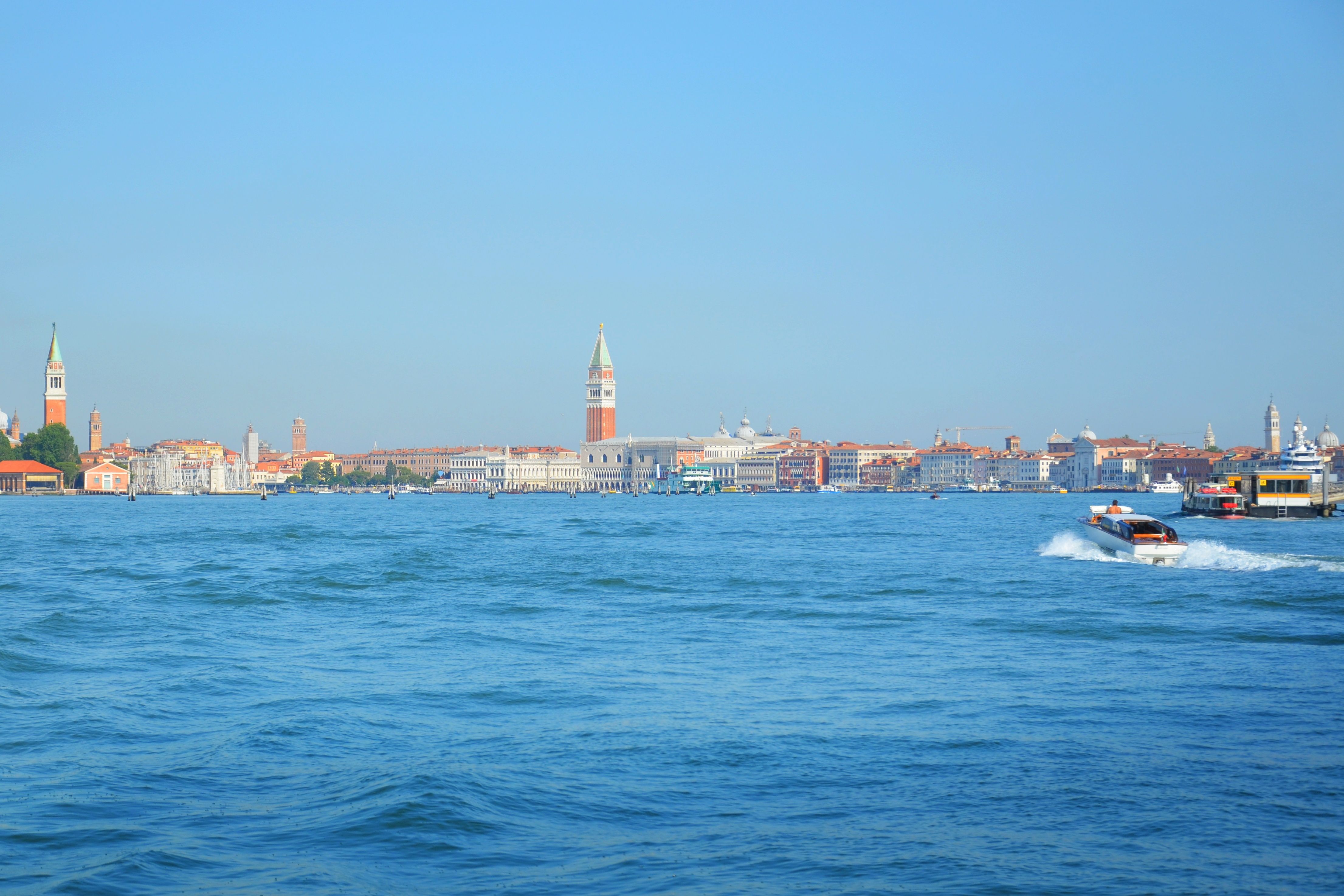
and a good deal of its foreign policy. The building faces the Bacino di San Marco in the
Venetian Gothic manner — pointed ogee windows, a loggia of slender columns, brick and
Istrian stone cooled by the water in front of it.
For four centuries it was a private residence and a stage for state receptions. Then, in 1822,
a hotelier from Friuli named Giuseppe Dal Niel took a lease on part of the palace and opened it
to travellers. Venetians shortened his surname the way Venetians do, and the hotel has been the
Danieli ever since.
The three palaces
One address, three buildings
The Danieli is not a single structure but three, joined internally by bridges — a very
Venetian solution to the problem of growth in a city with no spare ground.
Palazzo Dandolo — 14th century
The original. Its four-storey atrium is the hotel's great set piece: pink marble columns,
gilded balustrades and a golden staircase that climbs through the full height of the building
under Murano glass. Every guest walks it at least once slowly.
Palazzo Casa Nuova — 19th century
Added as the hotel outgrew the palace, in a neoclassical register that sits quietly beside
its Gothic neighbour.
Palazzo Danieli Excelsior — 20th century
The most recent wing, completed around 1950 and long the source of the hotel's rooftop
terrace and its lagoon-facing upper floors.
The register
Who has slept here
The 19th century brought the writers. Charles Dickens, Honoré de Balzac, Marcel Proust and
John Ruskin all stayed, as did Richard Wagner. George Sand and Alfred de Musset conducted a
famously turbulent affair in the building in 1834. The 20th century brought the film world:
Greta Garbo, Charlie Chaplin, Coco Chanel, Elizabeth Taylor, and later Madonna and George Clooney.
The hotel has also appeared on screen more than once — the Danieli's waterfront and interiors
are among the most recognisable in Venice.
2022–2026
The restoration
The hotel closed for a full restoration lasting more than three years, under the ownership of the
Italian group Gruppo Statuto. The interiors were reworked by the French designer Pierre-Yves Rochon,
whose previous projects include Four Seasons hotels in Paris, Florence, Milan, Geneva and Cap-Ferrat.
Rochon's approach used light, glass and mirrors to open the palaces up, working in a palette taken
from the buildings themselves: celadon blues and greens, soft pinks, warm golden yellows and rich
terracotta. The materials are local wherever possible — Murano glass, blown on the island since
the 13th century; Rubelli fabrics, woven in Venice since 1889; Venetian terrazzo floors and
Italian marbles.
The hotel reopens on 26 August 2026 as Danieli, Venezia, A Four Seasons Hotel, under General Manager
Christian Zandonella. It is Four Seasons' first property in Venice and its fourth in Italy, after
Milan, Florence and Taormina.
Looking after the lagoon
Sustainability
Venice has a sharper interest than most cities in what hotels do with their resources. The restored
Danieli runs an AI-assisted food waste system in its kitchens, sources produce from the lagoon island
of Sant'Erasmo, has removed single-use plastics, and has fitted LED lighting and water conservation
systems throughout the three palaces.